King Wen and King Shou of Shang
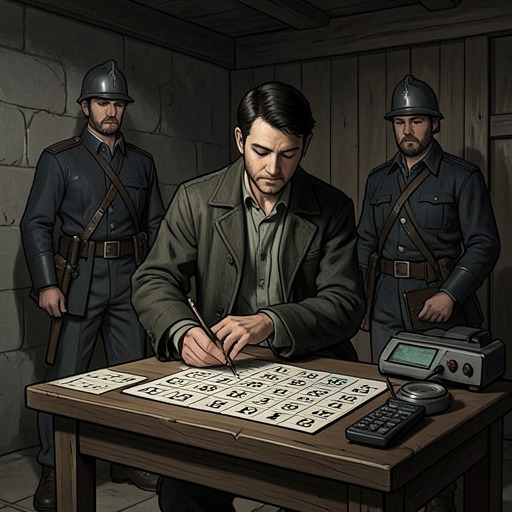
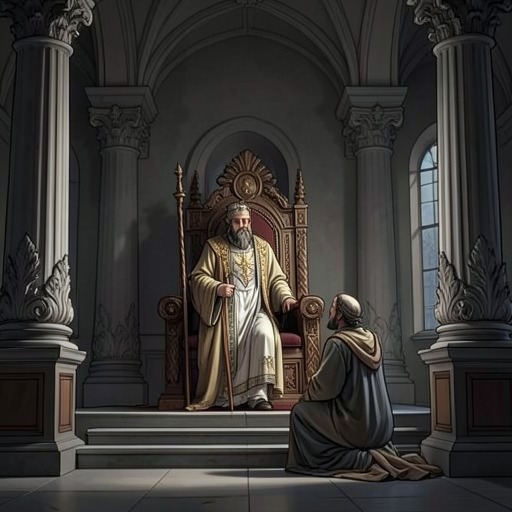
I ChingKing Wen and King Shou of Shang stand at the center of a political confrontation that the account links to the late Shang’s disorder and the emergence of the Zhou. King Shou’s suspicion led to King Wen’s imprisonment at Youli in 1143 BC; under threat, King Wen occupied himself with the lineal figures later associated with his contribution to the I Ching.
Opposing Political Conditions
The conflict is framed against a kingdom in decline. The account attributes the crisis to King Shou’s character and rule: his government had lost the people’s confidence, officials violated the laws, and violence and treachery spread. The dynasty’s condition is likened to someone attempting to cross a great stream without finding a ford or bank, an image of danger without a clear route to safety.
King Wen, then known as Khang, ruled the western principality of Zhou. He had succeeded his father in 1185 BC and had become a kind of viceroy over a large part of the kingdom. The account describes him as capable in peace and war, wise and self-restrained, and admired by princes and people. Many would have welcomed his leading an attack on King Shou, but King Wen held back rather than expose himself to the charge of disloyalty. This restraint sharpened the contrast between the two rulers: King Shou’s suspicion escalated, while King Wen’s conduct was marked by caution.
Imprisonment and the Turn to the Figures
King Shou’s jealousy eventually fell on King Wen, who was imprisoned at Youli in 1143 BC. His confinement was brief: King Wen’s supporters appeased the ruler’s suspicion and secured his release in the following year. The account places his work on the lineal figures during this imprisonment, when an order for his death could arrive at any moment.
Divination by figures and stalks was already an established practice, and King Wen would have known it as part of his country’s institutions. The text cautiously suggests that studying the figures might have helped quiet King Shou’s suspicions if his keepers noticed what he was doing; it does not establish this as King Wen’s intention. The account instead emphasizes the transformation of the figures in his hands: he connected them with natural objects, human society, and the actual or possible condition of the kingdom, then gave each a name and attached counsel or warning to it. In this reading, work undertaken under political confinement became a way of directing divinatory language toward reasoned reflection.
Historical Setting and Authorship
The chronology ties King Wen’s attributed contribution to the crisis between the rulers. The account dates the height of their troubles to 1143 BC, when King Shou imprisoned him, and proposes that King Wen composed his part of the I Ching in 1143 or 1142 BC—possibly beginning it in the first year and finishing it in the next. It also says that the Zhou replaced the Yin dynasty in 1122 BC, after King Wen’s lifetime; King Wen founded the Zhou polity but never occupied its throne.
King Wen’s portion is distinguished from the larger share attributed to his son, Tan, known as the Duke of Zhou. In the account’s description of the text, King Wen interprets each hexagram as a whole and indicates the possible action and its fortune, while the Duke of Zhou explains the separate lines. This division makes the work more than a record of their personal conflict: the political crisis supplies a context for King Wen’s contribution, but the resulting text treats moral, social, and political questions through symbolic figures rather than narrating the imprisonment directly.
Conflict as an Interpretive Context
The account connects the I Ching’s language of apprehension and danger with the troubles between King Wen and King Shou. It presents the text as teaching how peril may be turned toward security and how careless ease can end in collapse. The political opposition thus becomes a historical context for counsel about conduct under danger, not simply a contest for power.
The relationship also illustrates the limits of what the account claims. King Wen’s confinement and the timing of his work are given as historical circumstances, while the suggestion that his study might have soothed his captors remains explicitly tentative. What is firm in the account is the contrast between a ruler whose suspicion culminated in imprisonment and a restrained rival whose work on the figures is associated with the crisis. Their conflict gives the attributed authorship a specific political setting without reducing the I Ching to a simple chronicle of their struggle.